

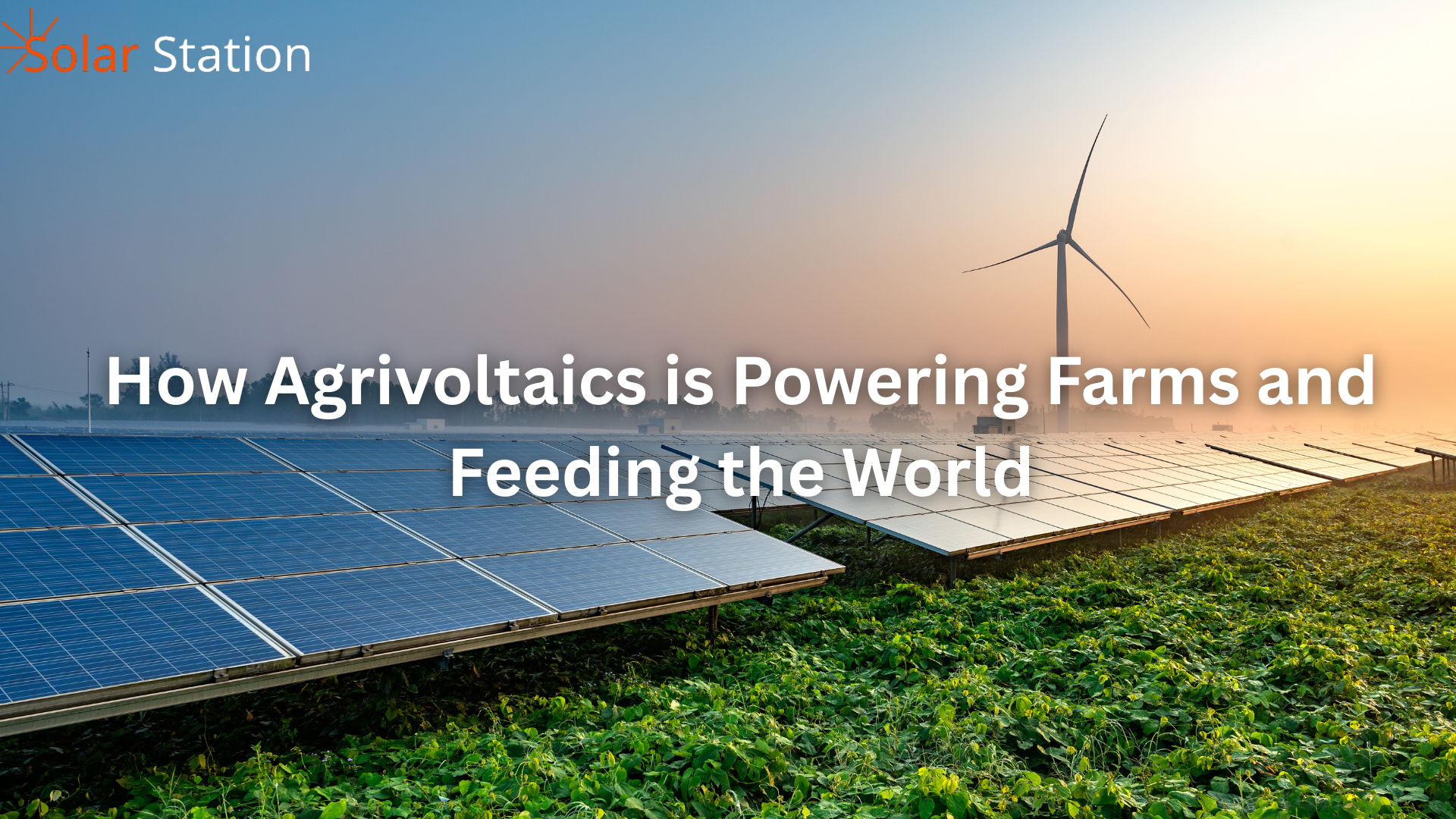
How Agrivoltaics is Powering Farms and Feeding the World
Date: 2025-09-23
Agrivoltaics combines solar energy with farming, helping farmers grow crops and produce renewable power on the same land. Learn how it works, its benefits, global examples, and challenges.
As the world looks for solutions to the linked challenges of climate change, energy demand, and food security, agrivoltaics is gaining attention. This method combines agriculture with solar photovoltaic (PV) systems, allowing farmers to grow crops while generating renewable energy. It makes sure that limited land can provide both food and clean power. In this article, we’ll explore what agrivoltaics is, how it works, its benefits for farmers and communities, and the challenges that need to be faced before it can expand globally. Agrivoltaics, also known as “solar sharing” or “dual-use solar,” merges solar panels with farmland. Instead of competing for space, solar arrays are placed above crops or pastures, letting plants grow underneath. These panels are usually set higher than traditional ground-mounted arrays, allowing enough sunlight and rainfall to reach the crops below. The idea is straightforward: use the same land for two purposes at once—farming and energy production. This strategy benefits both farmers and the wider community; food production continues while renewable energy helps cut dependence on fossil fuels. Globally, farmland faces significant strain. Urban development, industrial growth, and climate change are reducing the amount of arable land, while the demand for food is increasing rapidly with population growth. At the same time, governments and businesses are pushing to expand renewable energy infrastructure, often leading to conflicts over land use between food and energy production. Agrivoltaics offers a solution to this issue. By combining energy production with food cultivation on the same land, farmers don’t have to choose between growing crops and hosting solar panels. Instead, they can do both, increasing productivity and creating new income sources. For example, in countries like India, where agricultural land is vital, agrivoltaics can enhance solar rooftop initiatives. While rooftops provide clean energy for households, agrivoltaics helps farmers maximize open land by feeding communities and generating power simultaneously. Agrivoltaic systems are designed to balance light and shade, ensuring crops receive enough sunlight for photosynthesis. Depending on the types of crops and local climate, solar panels may be: - Elevated higher off the ground – Panels are often installed 10 to 15 feet above the soil to allow space for farming equipment and livestock movement. - Tilted or adjustable – Some systems use tracking mechanisms that let panels rotate to capture more solar energy while controlling the amount of shade below. - Spaced strategically – Panels can be installed with gaps between them to create alternating areas of light and shadow, which is ideal for certain crops. The crops benefit from partial shade, which helps keep soil temperature steady, reduces evaporation, and protects plants from heat stress. At the same time, the solar panels benefit from the cooling effects of vegetation, which can boost their efficiency. Agrivoltaics is more than just a smart land-use strategy; it offers real benefits across agriculture, energy, and the environment. 1. Improved Crop Yields in Harsh Climates In areas with high temperatures, too much sunlight can harm plants and dry the soil. Agrivoltaic shading helps minimize these risks. Studies in the U.S., Japan, and Europe have found that crops like lettuce, spinach, tomatoes, and peppers thrive under solar panels, often yielding more than those grown in full sun. 2. Energy Generation for Farms and Communities Solar panels create clean electricity that farmers can use for irrigation systems, storage facilities, or machinery. Surplus energy can be sold back to the grid, providing an extra income source. Farmers often consult solar panel installers to design dual-use projects that balance crop growth and energy efficiency. 3. Efficient Use of Land Agrivoltaics allows landowners to produce two outputs from one piece of land: food and energy. This is particularly valuable in countries where good farmland is scarce or where renewable energy expansion is limited due to land availability. 4. Water Conservation Shade from solar panels lowers water evaporation from the soil, helping farmers save on irrigation costs. This is especially helpful in areas prone to drought. 5. Climate Resilience and Sustainability Producing renewable energy helps lower carbon emissions. At the same time, agrivoltaics protects crops from extreme weather events, making them more resilient to climate change. Globally, pilot projects and large-scale installations show that agrivoltaics is effective: - Japan: As an early adopter, Japan has thousands of small agrivoltaic farms growing crops like tea, ginseng, and lettuce under solar panels. - India: Agrivoltaics is being introduced in rural areas to power irrigation pumps and reduce farmers’ dependence on diesel or unreliable grid electricity. These projects support government-backed rooftop solar services that provide affordable energy solutions to urban households. - France & Germany: These European nations are heavily investing in agrivoltaic research, with vineyards and orchards showing promising results in maintaining crop quality under partial shade. These examples highlight the flexibility of agrivoltaics across different climates, crop types, and farming methods. While the promise of agrivoltaics is exciting, several challenges must be overcome before it can be widely adopted: - High Upfront Costs – Elevated solar arrays and specialized designs are more expensive than typical solar farms. Access to financing is essential for farmers. - Crop-Specific Suitability – Not all crops thrive in shaded conditions. Research is ongoing to find out which plants do well under panels. - Technical Expertise – Farmers may need training to adjust their traditional practices to fit agrivoltaic systems. - Policy and Incentives – Many countries lack clear policies or incentives to encourage dual-use solar projects. Supportive regulations are necessary to drive adoption. For households or small businesses, the decision is easier: people can compare local solar installers to find affordable, reliable options. For farms, the challenge lies in modifying entire agricultural systems to fit new infrastructure. Agrivoltaics is still developing, but it has great potential. As solar costs keep falling and the demand for sustainable food systems grows, agrivoltaics could be key in feeding the world while providing power sustainably. Future innovations, such as transparent solar panels, lightweight materials, and AI-driven panel tracking systems, will enhance the efficiency and affordability of agrivoltaics. With proper government support and collaboration from industry, farms could become energy hubs of the future—producing both crops and clean electricity. For homeowners, similar advancements in solar energy for homes will make it easier to integrate small-scale systems into daily life, cutting costs and reducing grid reliance. Together, these technologies can transform both rural and urban energy landscapes. The world is facing the twin challenges of ensuring food security and transitioning to renewable energy. Agrivoltaics offers a practical, scalable, and sustainable solution. By combining farming and solar energy on the same land, this method empowers farmers, reduces environmental impact, and maximizes land use. As the technology matures and more people adopt it, agrivoltaics could fundamentally change agriculture and energy production—helping us create a future where farms not only feed the world but also provide it with power.What is Agrivoltaics?
Why Agrivoltaics Matters Today
How Agrivoltaics Works
Benefits of Agrivoltaics
Real-World Examples of Agrivoltaics
Challenges to Overcome
The Future of Agrivoltaics
Conclusion
-
-
-
-
-
-